
"Narino origin"
400 article(s) found

Hierarchical and full Columbia exquisite boutique coffee beans grinding degree treatment method of roasting degree
The main varieties of Colombian coffee are Arabica coffee (coffea arabica), that is, small fruit coffee (small grain coffee). Relatively speaking, large fruit coffee (coffea robusta) is mostly grown in Africa of origin, such as the famous Madagascar coffee. There are several varieties of small fruit coffee. Brazilian coffee, which has the highest yield in the world, has large seeds, strong adaptability and high fruit yield.

Columbia Coffee Bean producing area Flavor description treatment quality Manor Fine Coffee introduction
The varieties of coffee in Colombia are mainly Arabica coffee (coffea arabica), that is, small fruit coffee (small grain coffee). Relatively speaking, large fruit coffee (coffea robusta) is mostly grown in Africa of origin, such as Madagascar coffee. There are several varieties of small fruit coffee. Brazilian coffee, which has the highest yield in the world, has large seeds and adaptability.

Colombia Coffee Flavor Taste Estate Introduction Lazmus Estate
The pure flavor of Colombia coffee comes from the natural environment of Colombia, which has the most favorable conditions for coffee growth. But beyond that, it is inseparable from the hard work of local growers. In Colombia, coffee is cultivated on 1.07 million hectares, there are about 302,000 coffee plantations in the country, and 30 to 40 per cent of the rural population depends directly on coffee production. Colombia

The flavor and taste of Colombian coffee introduces the characteristics of Colombian coffee beans
Colombian coffee is the first to be produced by Medellin in terms of yield and texture, which is characterized by full grains, rich nutrition, moderate acidity, good balance, rich aroma and soft taste. In addition to Medellin, the provincial capitals of the two neighboring provinces in the south, Armenia and Manizales, are also authors.

Characteristics of Columbia Coffee Bean producers Association introduction to the description of taste and flavor of Huilan Coffee Brand
Colombian boutique coffee beans introduce the variety of Colombian coffee is mainly small-grain coffee. Plants are small trees or large shrubs, 5-8 m tall, usually much branched at base; old branches gray-white, nodes dilated, young branches glabrous, compressed. Leaves thinly leathery, ovate-lanceolate or lanceolate, 6-14 cm long and 3.5-5 cm wide, tip long acuminate, acuminate part 10-15 mm long, base cuneate or

An introduction to the characteristics of coffee flavor and taste in the delicious Chateau Saint Roman, Colombia
After the founding of the United States, there was a dispute over the location of the capital. The North wants to locate its capital in New York. And the south wants the capital to be located in the south. In the end, the North and the South of the United States made a concession for the flag of Washington, D.C., to build a new city as the capital of the United States in the south not far from the north. The geographical location is provided by James Madiso (

Columbia Coffee Manor with Gump in Acid Flavor and Taste Variety introduction of Fine Coffee
The land of the District of Columbia [2] originally came from Maryland and Virginia. When the District of Columbia was founded, the north bank of the Potomac River included Georgetown (Georgetown,D.C.), Washington City (Washington City,D.C.) and Washington County (Washington County,D.C.). In 1878, the three places merged into Washington, D.C., and the city of Washington.

Description of Colombian Coffee Flavor with moderate acidity introduction to the treatment of Grinding degree of varieties
No matter in terms of yield or texture, Colombian coffee is first produced by Medellin, which is characterized by full granules, rich nutrition, moderate acidity, good balance, rich aroma and soft taste. In addition to Medellin, the provincial capitals of two neighboring provinces in the south, Armenia and Manizales, are also famous coffee producers

Description of flavor and taste of Colombian coffee beans introduction to the producing areas of grinding scale varieties
The pure taste of Colombian coffee comes from Colombia's natural environment with the most favorable conditions for coffee growth. But beyond that, it is inseparable from the hard work of local growers. In Colombia, the planting area of coffee has reached 1.07 million hectares, there are about 302000 coffee plantations in the country, and 30 to 40 percent of the rural population depend directly on coffee production in Colombia.

Introduction to the taste of Colombian coffee Lazimus Manor with a light and silky taste.
Colombian coffee has a silky taste. Colombian coffee is equated with high quality and good taste. It is sweet in acid, low in bitterness, rich in nutrition, with a unique sour and mellow taste, and the sour, bitter and sweet flavors of Colombian super coffee match well. Unique fragrance, after drinking, the aroma fills the whole mouth. Put the fragrance in the mouth
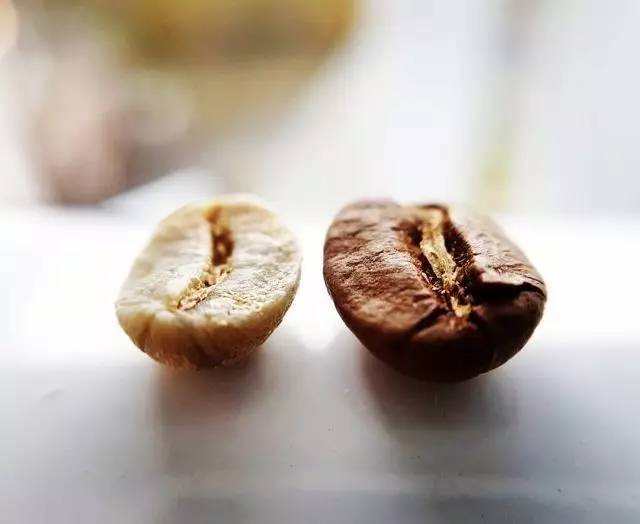
How to bake coffee from different producing areas
How to bake coffee from different producing areas? should you use the same baking curve for coffee from Narino in Colombia and coffee from Sidamo in Ethiopia? The answer is likely to be no. The microclimatic conditions such as climate, soil type and planting altitude of coffee producing countries are different, and the coffee produced by different countries is also different. In the baking process

Description of Flavor of High-quality Coffee beans in Colombian Coffee Variety producing area
The main varieties of Colombian coffee are small grains of coffee. Plants are small trees or large shrubs, 5-8 m tall, usually much branched at base; old branches gray-white, nodes dilated, young branches glabrous, compressed. Leaves thinly leathery, ovate-lanceolate or lanceolate, 6-14 cm long and 3.5-5 cm wide, tip long acuminate, acuminate part 10-15 mm long, base cuneate or slightly obtuse, rarely rounded, entire or

Introduction to the Flavor description treatment of Colombian Huilan Coffee Variety characteristics in producing areas
The pure taste of Colombian coffee comes from Colombia's natural environment with the most favorable conditions for coffee growth. But beyond that, it is inseparable from the hard work of local growers. In Colombia, coffee cultivation has reached 1.07 million hectares, there are about 302000 coffee plantations in the country, and 30 to 40 per cent of the rural population depends directly on coffee production. Columby

Flavor description of Columbia Linglong Coffee Bean introduction to Grinding scale treatment
The main varieties of Colombian coffee are small grains of coffee. Plants are small trees or large shrubs, 5-8 m tall, usually much branched at base; old branches gray-white, nodes dilated, young branches glabrous, compressed. Leaves thinly leathery, ovate-lanceolate or lanceolate, 6-14 cm long and 3.5-5 cm wide, tip long acuminate, acuminate part 10-15 mm long, base cuneate or slightly obtuse, rarely rounded, entire or

Introduction to the Flavor Grinding treatment method of Coffee Flavor in Lazimus Manor, Colombia
The pure taste of Colombian coffee comes from Colombia's natural environment with the most favorable conditions for coffee growth. But beyond that, it is inseparable from the hard work of local growers. In Colombia, coffee cultivation has reached 1.07 million hectares, there are about 302000 coffee plantations in the country, and 30 to 40 per cent of the rural population depends directly on coffee production. Columby

Introduction to the taste characteristics of Colombian boutique coffee bean flavor manor area
Coffee workers go up the mountain to pick coffee beans (also known as coffee cherries) by hand, so they can pick carefully and pick the most ripe and full fruits. The vast majority of Colombian coffee beans are water-washed and moderately roasted with a light, silky and sometimes sour taste, which is not as strong as Brazilian coffee and Italian Expresso and is known as green.

Description of Coffee Flavor in Lazimus Manor, Colombia; introduction to the characteristics of grinding degree and taste of varieties in producing areas
The suitable climate in Colombia provides a real natural pasture for coffee. Coffee trees in Colombia are mainly cultivated in the Andes, on steep slopes about 1300 meters above sea level, where the annual temperature is about 18 degrees Celsius, annual rainfall is 2000 to 3000 millimeters, latitude 1-11 15 north, longitude 72-78 west, and the specific range of elevation can exceed 2.000 meters. By

Flavor description of Colombian Ramon Coffee beans introduction of Grinding scale varieties in Manor production area
Colombian Ramon coffee bean flavor description taste manor grinding scale variety introduction regardless of yield or texture, Colombian coffee is first produced by Medellin, which is characterized by full granules, rich nutrition, moderate acidity and good balance. And rich aroma, soft and smooth taste. In addition to Medellin, Armenia is the capital of two neighboring provinces in the south.

Introduction to the characteristics of Colombian Coffee Flavor Manor with soft and smooth taste
The pure taste of Colombian coffee comes from Colombia's natural environment with the most favorable conditions for coffee growth. But beyond that, it is inseparable from the hard work of local growers. In Colombia, coffee cultivation has reached 1.07 million hectares, there are about 302000 coffee plantations in the country, and 30 to 40 per cent of the rural population depends directly on coffee production. Columby

A brief introduction to the Origin, Development, History and Culture of Columbia's exquisite Fine Coffee
Colombian coffee is famous for its boutique quality, soft taste and high taste. It all depends on the fact that the right climate in Colombia provides a real natural pasture for coffee. And the coffee varieties planted are mainly high-quality Arabica varieties. Colombian coffee trees are mainly cultivated in the Andes, on steep slopes around 1300 meters above sea level.